

En las compañías destiladoras que se precian de mantener altos y estrictos estándares en el proceso, apegados a conseguir productos premium, prácticamente es en la jima donde se inicia la elaboración del tequila, ya que desde la cosecha son seleccionados los agaves en su punto óptimo de madurez.
Desde la llegada a la fábrica empieza el control de calidad, ya que al recibo de la materia prima, es seleccionada al azar una muestra de piñas de cada lote y son analizadas en el laboratorio para determinar si los niveles de azúcares y madurez son adecuados y establecer los tiempos de cocción.
COCCIÓN
Antes de introducir en los hornos, las piñas son partidas en dos o cuatro partes según su tamaño, para favorecer un perfecto cocimiento y óptimo aprovechamiento.
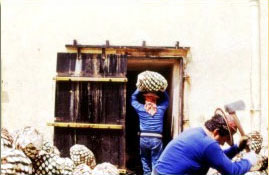
Dentro de los hornos, se van acomodando manualmente los agaves. Una vez completada esta operación en el horno, se inicia el proceso de cocción y se prolonga por espacio de 48 horas en promedio, inyectando vapor de agua en el horno.
El propósito de esta cocción es el de conseguir la solubilidad e hidrolizar los azúcares del agave, ya que la inulina es poco soluble en agua y no fermentable en forma directa.
En el proceso de cocción tradicional se emplean hornos de mampostería, aunque en la actualidad algunos productores de tequila realizan el cocimiento de agave en autoclaves y/o difusores.
Las piñas del agave después de su cocimiento permitirán desdoblar sus azúcares y de esta manera los jugos o mostos quedarán listos para su fermentación.
MOLIENDA
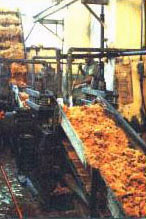
Después del perfecto cocimiento, se descargan los hornos y las piñas cocidas se trasladan al área de molienda.
La molienda se divide en varias etapas y tiene como propósito extraer los azúcares que se encuentran en la fibra del agave. Esto se lleva a cabo en molinos cuya estructura va desde la piedra hasta trituradoras y molinos de acero inoxidable, según el fabricante.
Las etapas de molienda se inician con el desgarramiento de las piñas, el cual consiste pasar el agave cocido por una máquina que se encarga de desmenuzarlo para, posteriormente, llevarlo a una sección en donde prensas de tipo cañero exprimirán los jugos.
Una vez exprimido este material fibroso, pasa por una sección donde se aplica agua para la máxima extracción de los azúcares. Como resultado de este proceso se obtiene un jugo de agave que contiene un 12% de azúcares. Con esta materia prima se formula el mosto o caldo para la fermentación.
FERMENTACIÓN
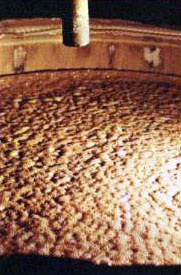
Preparado el mosto para fermentación éste se inocula con un cultivo microbiano, el cual puede ser una cera pura de levadura saccaromyces cerevisiae o bien de alguna otra especie.
Cuando el mosto se encuentra listo empieza la fermentación de este, uno de los pasos más importantes pero menos estudiados, ya que en esta fase se produce el alcohol y otros componentes organolépticos que conforman el tequila. Esta fermentación se lleva a cabo en tanques de acero inoxidable de volumen variable, abiertos y controlando la temperatura que oscila entre los 30 y los 42 grados centígrados.
Este proceso fermentativo puede durar entre 12 y 72 horas, dependiendo del grado de alcohol deseado que puede ser de 6% para tequila mixto y 4.5% para tequila 100%. Terminada la etapa de fermentación, se deja en reposo el mosto para propiciar la generación de compuestos aromáticos importantes en el producto.
DESTILACIÓN
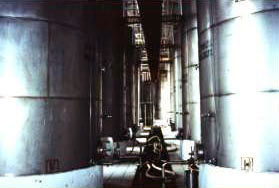
Existen dos formas de realizar la destilación: mediante la utilización de alambiques o en columnas, siendo el primero el más usual. En el primer caso, regularmente se utiliza un tándem de dos alambiques de cobre, material que ayuda a eliminar compuestos sulfurados indeseables.
En el primer alambique, el mosto muerto se calienta con vapor y se destila hasta tener un producto intermedio ordinario, con una concentración de alcohol de entre el 25 y el 30%, al cual se le han removido los sólidos, parte del agua y las cabezas y colas. Las primeras contienen componentes volátiles que destilan antes que el etanol, debajo de los 80 grados centígrados, como metanol, isopropanol y acetato de etilo, y las segundas contienen alcoholes menos volátiles como amílico y algunos ésteres.
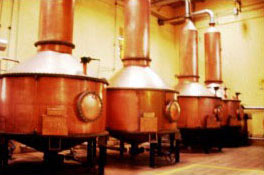
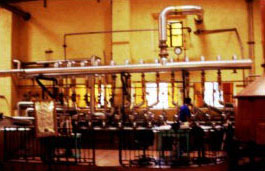
En el segundo alambique, el ordinario se destila nuevamente para enriquecer el contenido alcohólico hasta el 55%, además de refinar considerablemente el producto. Este tequila al 55% se considera un producto final, ya que de hecho es el que se comercializa a granel. Antes de envasarse, este destilado se diluye con agua desionizada, para lograr productos finales de 35% a 43%.
Al utilizar columnas se emplean hasta tres en tándem. En este caso el mosto entra a la columna por la parte superior, a contracorriente con vapor, con lo que se evaporan los compuestos volátiles que se condensan en los diferentes platos de la columna; normalmente cuando se emplean columnas en vez de alambiques el producto es más neutro, debido a que la destilación es más selectiva.
MADURACIÓN
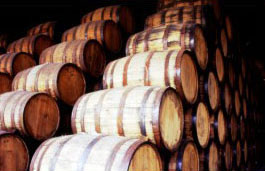
Una vez destilado, el producto final se concentra en tinas de paso en donde se diluye para pasarlo a los pipones o barricas donde se añejará dependiendo del tequila que se desee obtener.En la maduración de tequilas, la última etapa se realiza en barricas o pipones de roble o encino blanco, maderas que confieren al producto final aromas, colores y sabores muy peculiares, los cuales dependen de diversos factores como la edad, grosor de la duela, graduación alcohólica y condiciones de reposo o añejamiento. Son muy importantes las condiciones de humedad y ventilación, ya que en el proceso de envejecimiento se llevan a cabo reacciones oxidativas.
Por último, antes de embotellar es necesario eliminar algunos sólidos conferidos por la madera, esto se realiza a través de filtración con celulosa o carbón activado.